How Scam Movers Silence Their Critics
When bad movers can't fix their reputation, they sue the people who document it.
The Playbook
The strategy is consistent across multiple documented cases. A moving company accumulates negative reviews and watchdog listings. Rather than improving service, they hire lawyers to sue the watchdog sites, individual reviewers, or consumer advocates. The goal is not to win the lawsuit. It is to make the cost of maintaining negative information higher than the cost of removing it. Most small watchdog sites and individual consumers cannot afford to fight.
This is sometimes called a SLAPP suit (Strategic Lawsuit Against Public Participation). The lawsuit itself is the weapon. Discovery costs, attorney fees, and the stress of litigation are enough to silence most critics, regardless of the merits of the case.
Documented Cases
Safe Ship and other movers led by Roger Vance and Aldo DiSorbo sued USMPO (the US Moving Protection Organization) in 2025 seeking to have USMPO remove their listings and ratings. Nationwide Relocation Services, owned by Aldo DiSorbo, similarly targeted MovingScam.com in a 2007 lawsuit. The SafeShip litigation effort was backed by industry actors seeking to reshape the regulatory environment in ways that would reduce accountability for carriers.
In each case, the response to documented consumer harm was litigation against the messenger, not improvement of the service. The pattern is consistent: companies with legitimate fraud complaints invest in legal action to suppress the complaints rather than investing in operational improvements to prevent them.
Non-Disparagement Clauses
Some moving contracts include clauses that prohibit customers from posting negative reviews. Trunk flags this practice as a red flag because it signals that the company expects complaints and has preemptively built legal barriers against them. Any mover that requires you to waive your right to post an honest review is telling you something about the experience they expect you to have.
The Consumer Review Fairness Act of 2016 made many of these clauses unenforceable at the federal level. But the clauses persist in contracts because most consumers do not know the law protects them. The chilling effect works even when the clause itself is legally void. A consumer who sees "you agree not to post negative reviews" in their contract is less likely to post, regardless of whether the clause would hold up in court.
Why Data Platforms Are Harder to Silence
Individual review sites and consumer advocates are vulnerable to legal pressure because they depend on editorial judgment that can be challenged as defamatory. Data platforms like Trunk are structurally different. We report verifiable facts: FMCSA registration status, crash records, BBB complaint counts, Google rating distributions, and community sentiment from public forums. These are not opinions. They are documented data points from authoritative sources.
Trunk cross-references eight sources for each of the 4,200+ movers in our database. When we flag a carrier, the flag is based on data: complaint volumes, licensing gaps, chameleon carrier patterns documented through state business filings, rental truck evidence from consumer photos. This makes the litigation playbook less effective because the information we publish is drawn from government databases and publicly available consumer accounts.
What Consumers Should Know
If a mover has sued a review site or consumer advocate, that fact alone is informative. It means they chose to spend money on lawyers rather than on improving their service. Check whether a mover has been involved in litigation against review platforms. Search their company name plus "lawsuit" or "defamation."
Be skeptical of any contract that includes a non-disparagement clause. Under the Consumer Review Fairness Act, these clauses are generally unenforceable for consumer contracts. You have the right to post honest reviews about your experience.
And pay attention to review patterns. A mover with hundreds of positive Google reviews but zero negative ones may have had negative reviews removed through legal pressure or platform manipulation. Authentic review profiles include a range of ratings. A perfectly clean review history is itself a red flag.
The Original Playbook: Nationwide v MovingScam.com (2007)
In July 2007, Nationwide Relocation Services Inc., a DiSorbo company based at 6245 Powerline Road in Fort Lauderdale, sued Tim Walker, the founder of MovingScam.com, in the Southern District of Florida (Case 0:07-cv-60983). The complaint alleged false advertising under the Lanham Act, trademark infringement, defamation, and tortious interference.
The core claim: Walker had published 3,300 opinions, comments, and criticisms on MovingScam.com and encouraged consumers to avoid Nationwide. Nationwide argued that because Walker endorsed some movers and warned against others, the website was a commercial enterprise masquerading as consumer advocacy.
The case settled. Walker continued operating MovingScam.com, which still receives complaints 'almost identical' to those documented in 2001. But the playbook was established: sue the watchdog, claim the complaint data is defamatory, and try to bleed the defendant dry.
Eighteen years later, Vellar Holdings (Safe Ship) used the identical strategy against USMPO. Same court (S.D. Florida). Same legal theories (Lanham Act, defamation). Same objective: silence the organization publishing complaint data about the plaintiff.
The USMPO Case: Three Lawsuits, One Strategy
In 2025, three moving companies filed nearly identical federal lawsuits against USMPO (United States Moving Protection Organization), a 501(c)(3) nonprofit that maintains a moving company database and verified carrier network. The plaintiffs, Vellar Holdings LLC (operating as Safe Ship Moving Services), Colonial Van Lines Inc., and AMS Moving Inc. (operating as Amerisafe), were represented by the same counsel and coordinated their filings to maximize the defendant's legal costs. The strategy was stated explicitly in a recorded pre-suit phone call: Roger Vance, owner of Vellar/Safe Ship, told the USMPO founder on August 4, 2024, that he was 'spending a million dollars a week on advertising,' intended to 'spend three or $400,000 and get your little site shut down,' and warned: 'I'm going to go and use whatever means are at my disposal, whatever means are at my disposal.' He added: 'Can you understand the types of things that I'll be willing to do to make sure that doesn't happen.' When the USMPO founder responded that the organization is a nonprofit with no interest in extortion, Vance replied: 'I've spent four years of my life, lost precious moments with my family, miss the deaths of loved ones in order to build this business to where it's at, and now you are endangering it.' The pre-suit demand letter, sent September 23, 2024 by the Lomnitzer Law Firm on behalf of both Safe Ship and Amerisafe, demanded that USMPO 'immediately cease and desist the false representations' and remove all content about both companies by September 30, 2024. The letter accused USMPO of using 'U.S.' in its name to confuse consumers into thinking it was a government entity, of being a lead generation operation with only three approved companies (all Florida-based), and of editing consumer reviews to add 'content intended to negatively impact Our Clients.' The letter closed: 'GOVERN YOURSELF ACCORDINGLY.'
The same law firm, the Lomnitzer Law Firm of Boca Raton, represents Home and Office Movers in separate consumer litigation, where it won $9,665 in attorney fees against a pro se consumer who sued for moving fraud (Mansour v. Home and Office Movers, S.D. Florida). A single law firm simultaneously defends scam movers against consumers AND attacks the consumer protection organizations that publish complaint data.
The central complaint: the plaintiffs were listed as 'not verified' on usmpo.org, and they claimed this harmed their business. They never identified any specific false statement. The court granted the defendant's first Motion to Dismiss, finding that Colonial Van Lines 'pled nothing more than conclusory facts.' The case remains pending in the Southern District of Florida (consolidated Case No. 25-cv-80042).
The Company Suing Consumer Watchdogs Is Also Being Sued by Its Own Employees
While Vellar Holdings (Safe Ship) was suing USMPO for publishing complaint data, a former Safe Ship employee was suing Vellar for unpaid overtime. In Weinstein v. Vellar Holdings LLC (S.D. Florida, 9:25-cv-80733, June 2025), a logistics coordinator alleged she worked 55 hours per week (84 in her last three weeks), was misclassified as a 1099 contractor, and was never paid overtime. She seeks $62,732 in damages. Roger Vance and Stanley Drinkard are named as individual defendants.
Safe Ship has the resources to hire attorneys to sue consumer protection nonprofits, to spend what Vance described as 'a million dollars a week on advertising,' and to threaten to spend '$300,000 to $400,000' to shut down a website. It does not, according to the Weinstein complaint, have the resources to pay its own employees overtime as required by federal law.
When They Can't Sue a Platform, They Target the Individual
The litigation playbook extends beyond platforms to individual consumers and consumer advocates. Following the filing of a Section 14704 complaint against Florida HHG broker Menards Moving and Storage, the broker's compliance department responded not by addressing the underlying $44,966 damages claim, but by sending a cease and desist to the retired lawyer representing the consumer. Menards, like other moving companies, also has a practice of threatening consumers with legal action and disruption of moving services when they post unfavorable reviews. The letter, dated June 12, 2026, from Katie Caruso of Menards' 'Compliance Department,' accused the attorney of unauthorized practice of law, cited criminal sanctions including 'significant fines, civil penalties, and even imprisonment,' and stated: 'our office can no longer communicate with you.' The letter cc'd the consumer at her home address. It closed: 'Please govern yourself accordingly.' The lawyer cited FMCSA's own rules of practice (49 CFR 386.4), which explicitly allow 'any person' to appear as a representative in agency proceedings. The broker did not dispute the factual allegations in the complaint. This pattern, attacking the messenger rather than the message, is consistent across the industry. It works against individuals who cannot afford to respond. It works less well against data platforms that report verifiable facts from public records.
Evidence
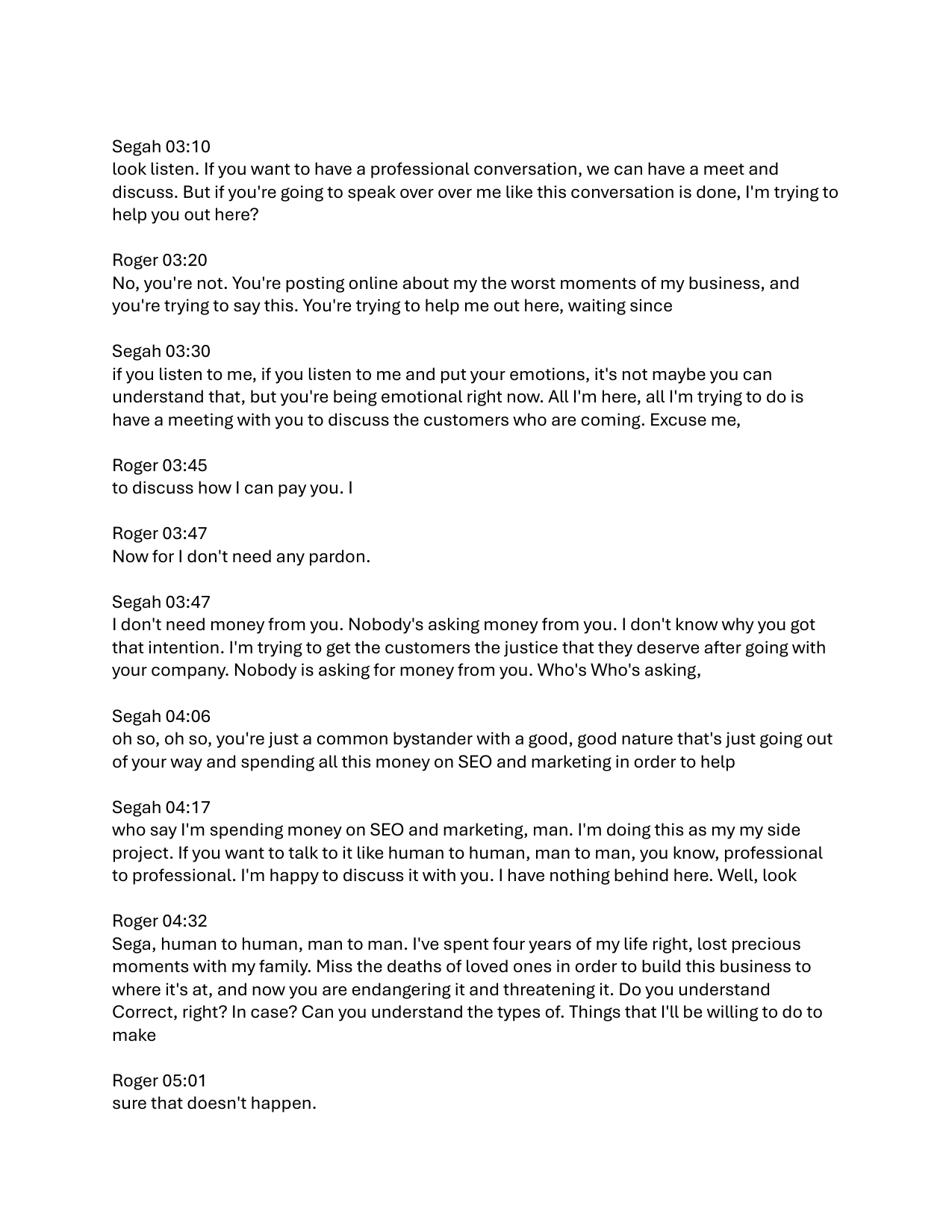
Roger Vance to USMPO founder: 'I'm going to bleed you dry... I'll burn $2 million on this.' Court exhibit from Case No. 25-cv-80042 (S.D. Florida).
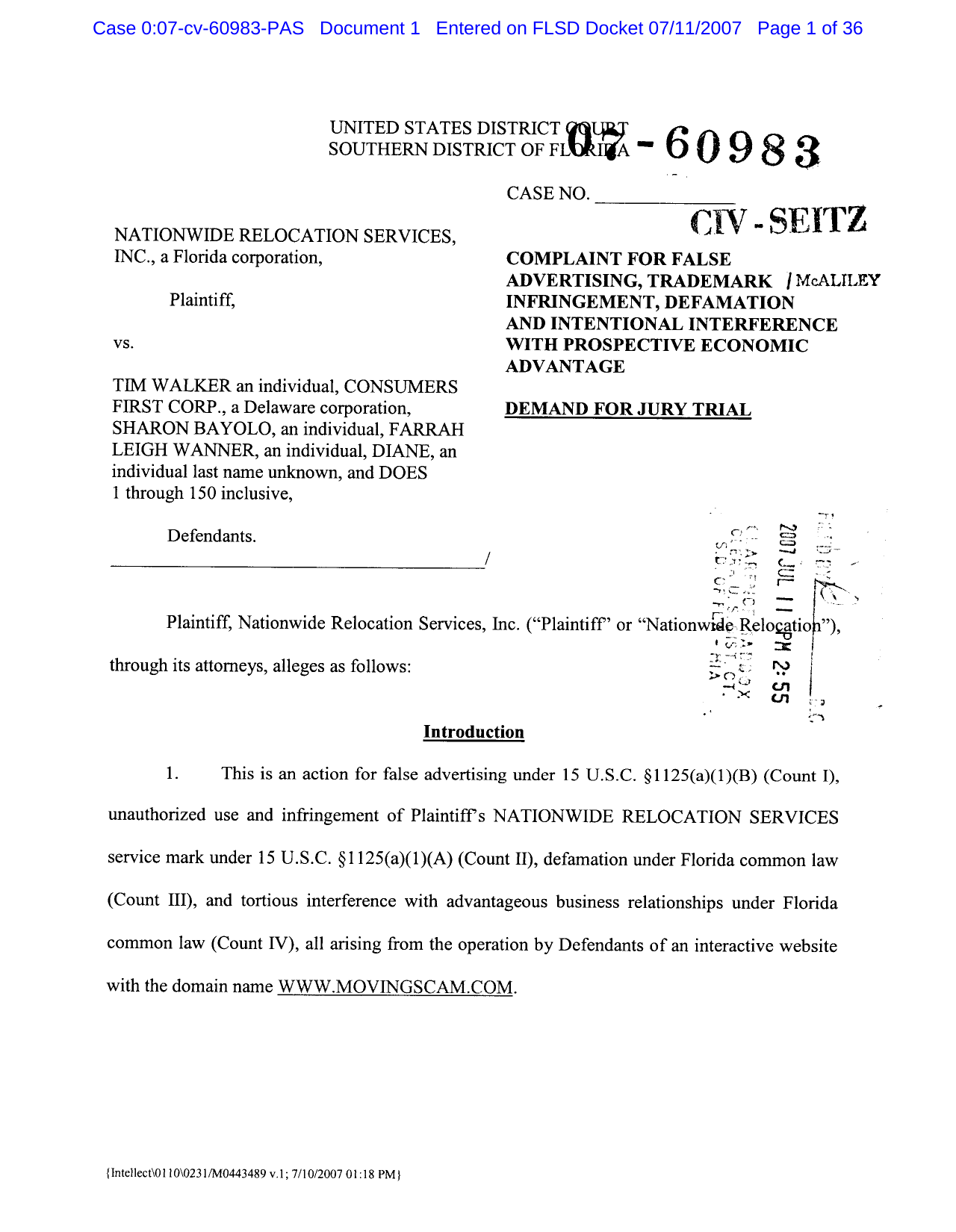
Nationwide Relocation Services (Aldo DiSorbo) v Tim Walker: 2007 lawsuit targeting the founder of MovingScam.com, the moving industry's leading consumer watchdog.
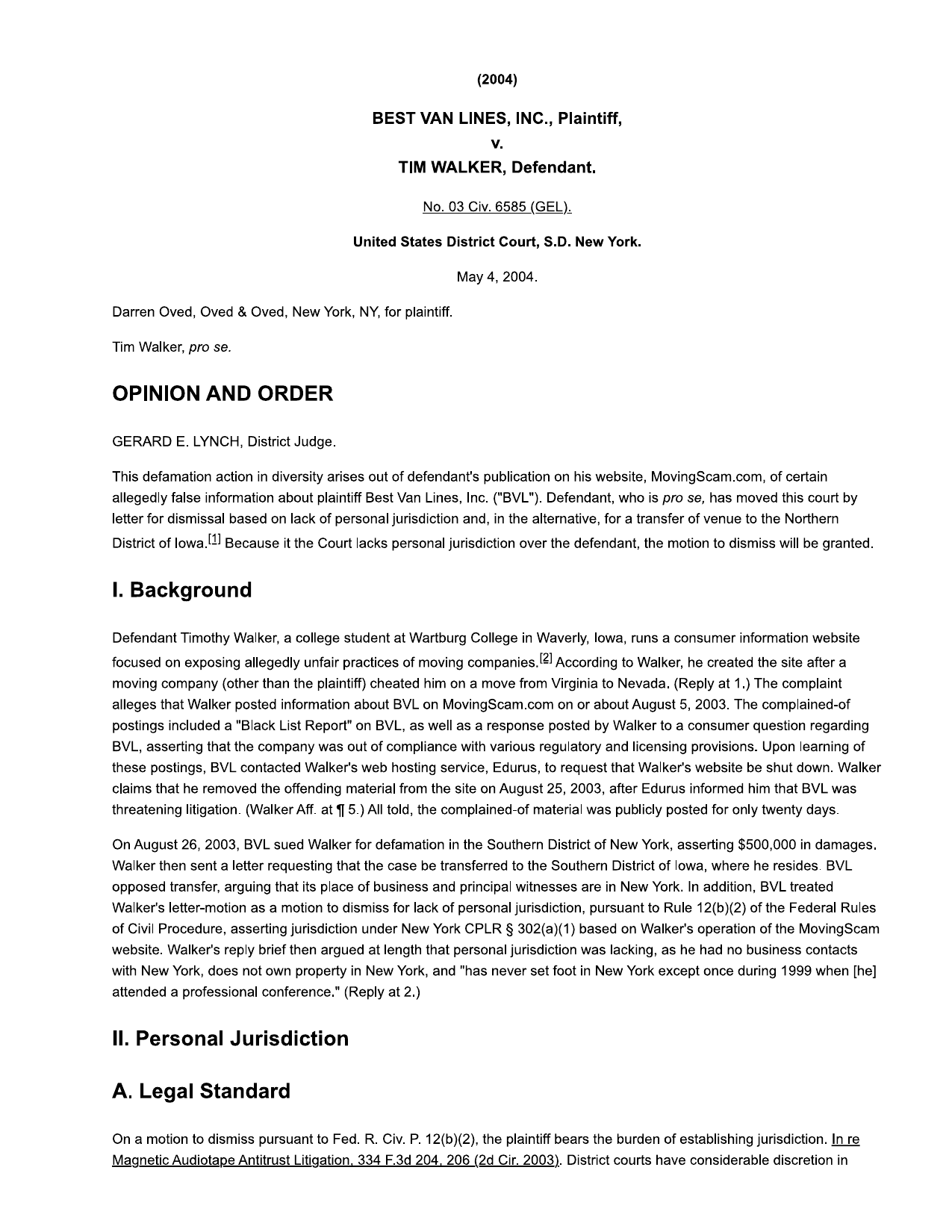
Best Van Lines v Tim Walker (S.D. New York, 2004): The first known lawsuit attempt to silence MovingScam.com, predating the DiSorbo/Nationwide suit by three years.
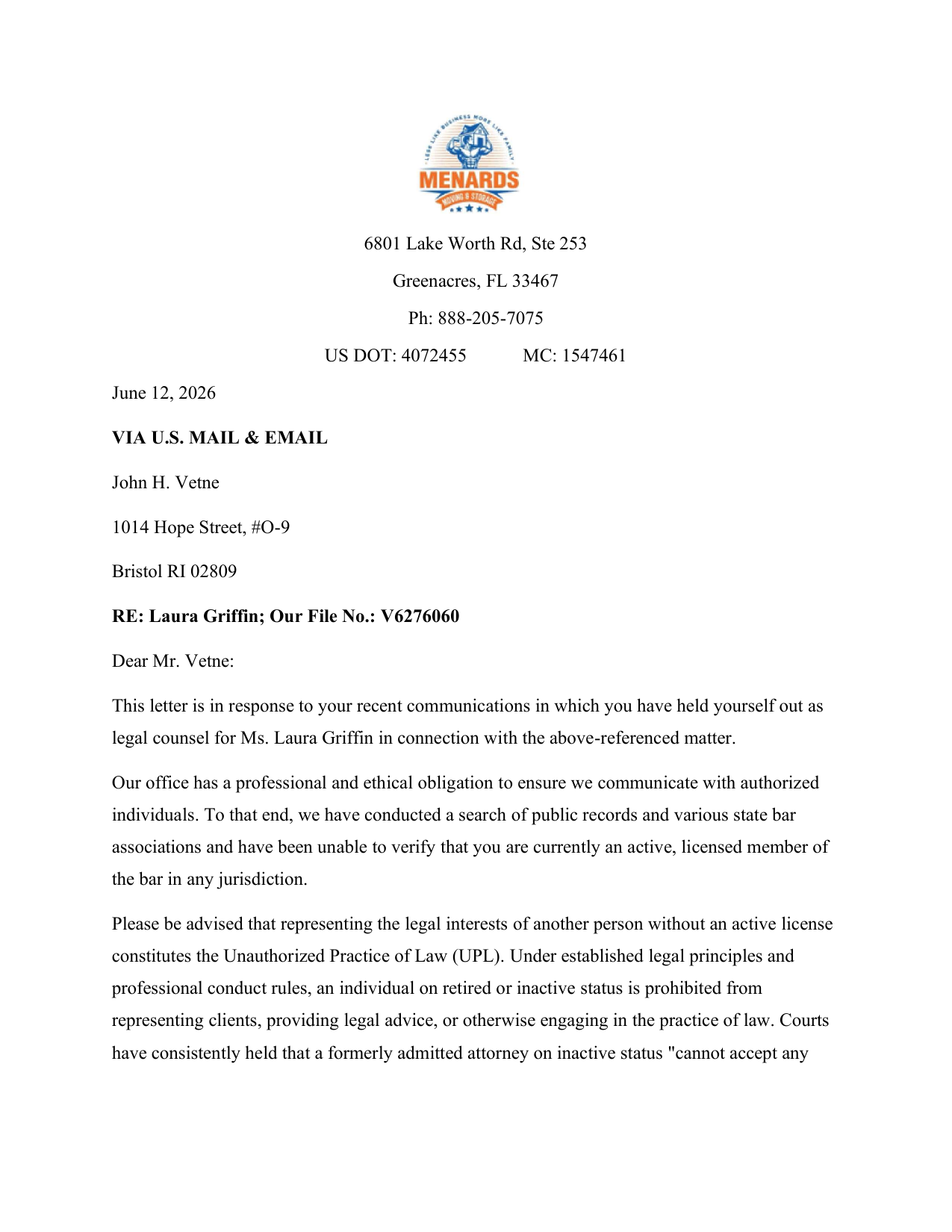
Menards Moving and Storage response to a Section 14704 consumer complaint: a cease and desist challenging the consumer representative's standing rather than addressing $44,966 in documented damages.
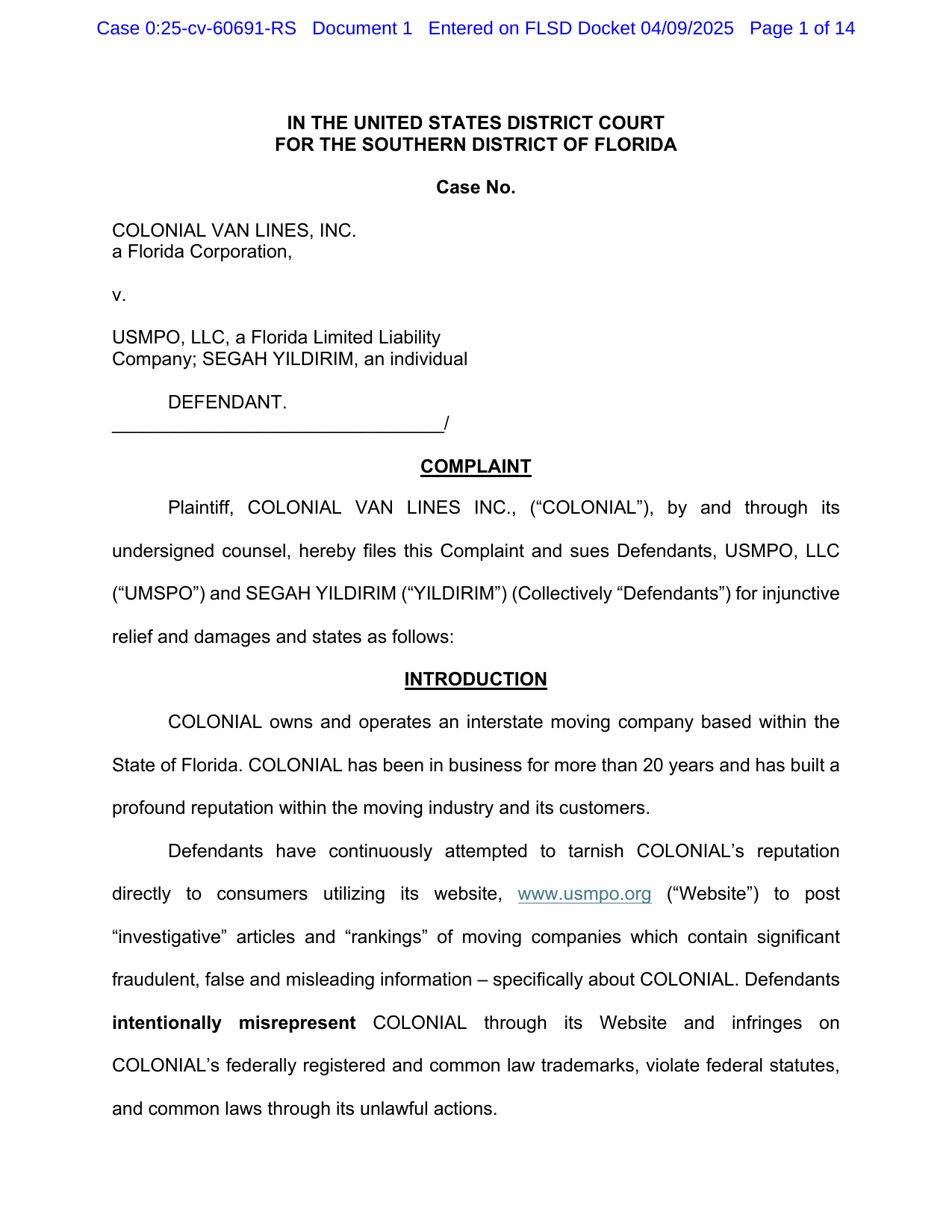
Colonial Van Lines Inc. v USMPO LLC and Segah Yildirim: original complaint (S.D. Florida, Case 25-cv-60691). Colonial, connected to Aldo DiSorbo and Nationwide Move Management, sued USMPO for listing them as 'not verified.'
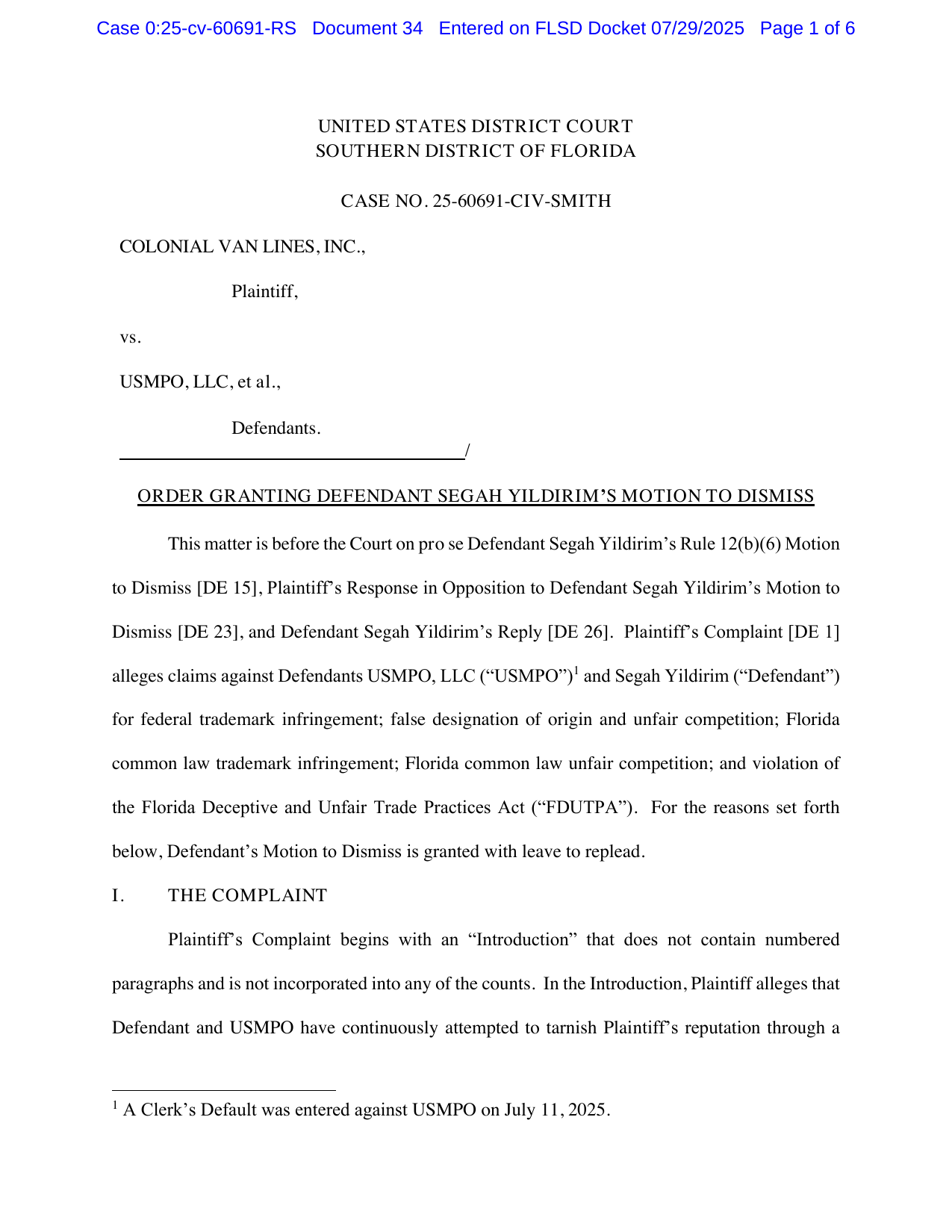
Court order granting defendant's motion to dismiss Colonial's complaint, finding it 'pled nothing more than conclusory facts' and failed to show 'how or where' trademarks were used.
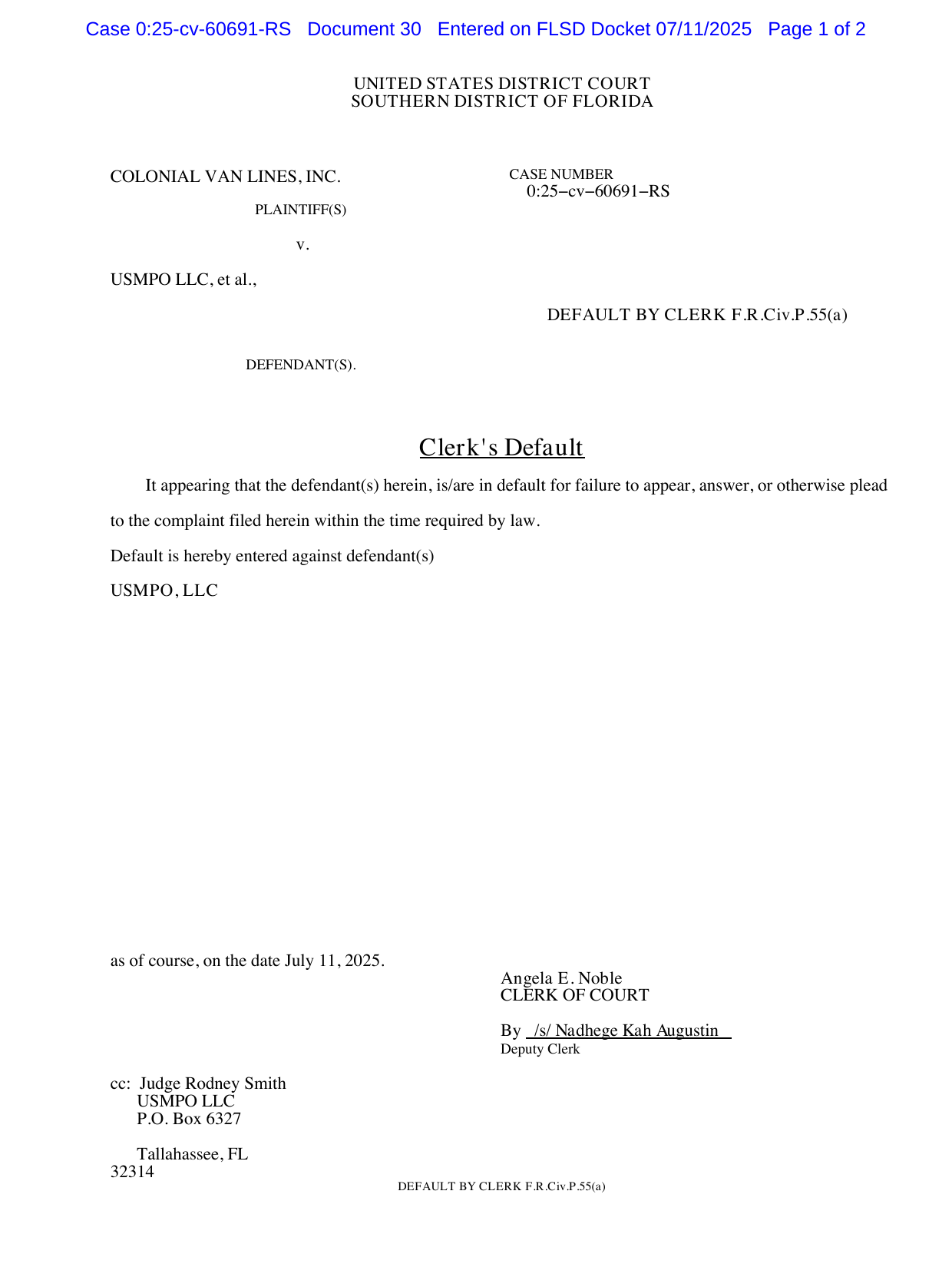
Clerk's entry of default against USMPO LLC. The court later set aside the default, finding 'good cause' existed because 'Courts prefer to decide cases on the merits rather than decide cases by default.'
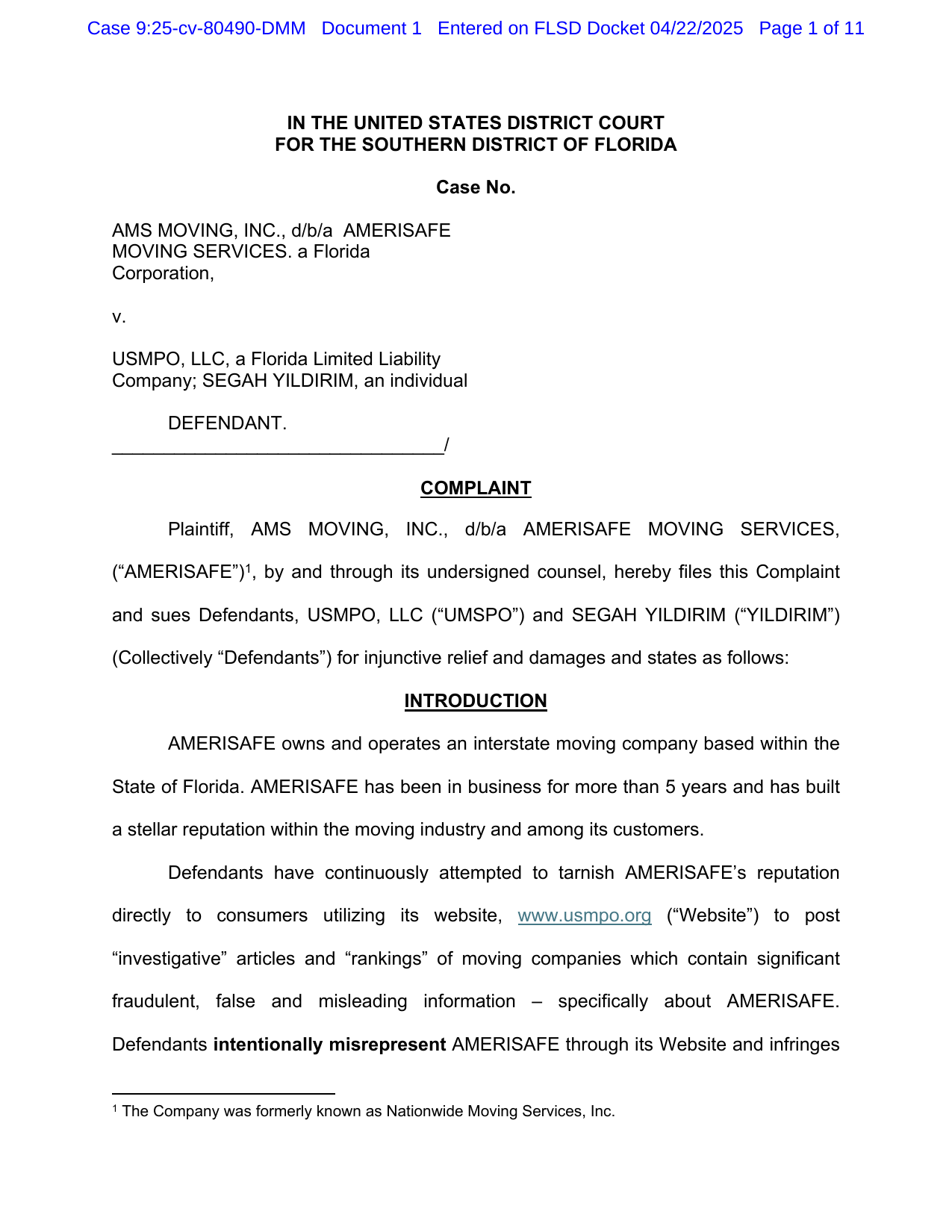
AMS Moving Inc. (Amerisafe) v USMPO LLC and Segah Yildirim (S.D. Florida, Case 25-cv-80490). The third coordinated lawsuit filed by the same counsel. AMS/Amerisafe was subsequently investigated by the Florida AG and DOT OIG for moving fraud and reached a civil settlement.
Companies Mentioned
Sources: Court records and legal filings. USMPO case documentation. MovingScam.com historical records. Consumer Review Fairness Act of 2016. Trunk mover database (4,200+ carriers tracked). Cross-platform review analysis, 2025-2026.