When Moving Fraud Finally Becomes Criminal: The Cases, Hundreds of Victims
Federal criminal prosecution of moving fraud requires hundreds of victims and years of documented harm. Restitution is rarely paid. And convicted fraudsters get new FMCSA authority while still on probation.
The Pattern: Prosecute Late, Collect Little
In August 2023, the DOT Office of Inspector General reported to Congress its household goods moving fraud enforcement record. Over the prior five years, OIG investigated 25 HHG cases. Of those, 8 were closed with 8 convictions resulting in 8+ years of incarceration, 6+ years of probation, 13 years of supervised release, and $28.5 million in fines, forfeiture, recoveries, and restitution. The remaining 17 cases were still open and had already produced 14 convictions, 26+ years of incarceration, and $5.2 million in additional penalties.
Those numbers sound significant until you consider the scale. FMCSA receives roughly 4,500 consumer complaints about moving companies per year. Over five years, that is approximately 22,500 complaints. The OIG investigated 25 cases. That is one investigation per 900 complaints.
The cases below span two decades and share common features: networks of shell companies operating interchangeably, lowball estimates followed by price inflation on moving day, hostage loads, and restitution orders that are rarely collected in full. Criminal prosecution is not reported on FMCSA's household goods website, is invisible to consumers researching movers, and is devoid of publicly known standards or criteria for when the agency will pursue action.
US v Farah Al-Ibrahim (New Jersey, 2018): Convicted, Then Re-Licensed
Farah Al-Ibrahim, a/k/a Farah Alhomsi, Farah Adam, Farah Adams, and Sara Adams, was charged in the District of New Jersey (Case 2:19-cr-00140) with conspiracy to commit wire fraud (18 USC 1349) for operating a network of moving companies that quoted lowball prices and raised them after loading. The conspiracy ran from approximately May 2010 through February 2015. Al-Ibrahim served as sales manager and bookkeeper for the companies. She was sentenced to 3 years probation and $75,193.55 in restitution. As of December 2023, she had paid $4,900, approximately 6.5% of the restitution ordered. Her payment schedule was reduced from $250 per month to $100 per month. She violated her probation conditions by opening credit accounts without approval. The probation office recommended no formal court action, and supervision expired as scheduled in January 2024. In January 2023, while still on criminal probation for moving fraud, Al-Ibrahim incorporated Booking Agency USA Ltd in New Jersey and was listed as registered agent, director, and incorporator. Court and FMCSA records indicate she obtained FMCSA household goods broker authority for this entity. A convicted moving fraud conspirator received a new federal license to operate in the same industry while still serving her sentence.
US v Moroz and Ohana, Great Movers (Brooklyn, 2020): FBI Investigation
Yakov Moroz and Tal Ohana were charged in the Eastern District of New York (Case 1:21-cr-00369) based on an FBI Special Agent affidavit. The defendants operated Great Movers Inc., doing business as Great Moving and Great Moving USA, from 1733 Sheepshead Bay Road, Suite 21, Brooklyn, New York.
The FBI affidavit documented every fraud tactic in the moving scam playbook, confirmed by federal law enforcement investigation:
Fictitious president: Great Movers listed 'Moye Gregory' as president at 266 47th Street, Brooklyn. The FBI agent visited the address and found no business by that name. The agent believes no individual named 'Moye Gregory' is associated with Great Movers.
Fictitious employees: Customer-facing staff used the names 'Bill Randall,' 'Allen Parks,' and 'Patrick Murphy,' all with @greatmovingusa.com email addresses. Great Movers' banking and payroll records showed no payments to any of these individuals. The names were fabricated to avoid discovery by customers and regulators.
Virtual offices: Great Movers claimed offices in Wisconsin and North Carolina. Both were virtual offices with no physical presence.
Chameleon reincarnation: In April and May 2020, the operation began using the name 'New City Movers,' adopting a DOT number previously issued to Mini Movers LLC of Blue Ash, Ohio. Between January and April 2020, four FMCSA registration forms were filed under this DOT number, each changing the owner's name, principal address, mailing address, and telephone number. This is the chameleon carrier pattern documented by a sworn FBI agent in a federal criminal complaint.
The case resulted in convictions. PJ Randhawa of NBC Chicago later reported over 800 victims and $3 million in losses, with 20-year sentences.
US v Pardi, Proud American Vanlines (Philadelphia, 2022): $12 Million, 9 Company Names, Identity Theft
In February 2022, Matthew Pardi (Fort Lauderdale FL) and Ashley Lynn Hars (Plantation FL) were indicted in the Eastern District of Pennsylvania for a $12 million moving fraud scheme. Their company, Proud American Vanlines LLC (formerly Moving Accounting Department LLC), operated under at least nine names: American Eagle Moving, Alliance Movers, Titan Moving and Storage, First Call Relocations, Trans World Van Lines, Safeway Moving System, Gateway Moving and Storage, and Prestige Worldwide Moving.
The indictment documented a complete fraud infrastructure. The defendants stole the identities of legitimate moving companies to build credible online profiles. They created false 5-star reviews on BBB and Yelp. They falsely claimed to be 'family owned,' to have been in business 'over a decade,' and to have served 'more than a thousand satisfied customers.' Once a consumer was ensnared, the defendants routinely increased estimates before and after loading, then held belongings hostage if the consumer refused to pay.
The charges included wire fraud, interstate transportation of property obtained by fraud, and aggravated identity theft. The maximum possible sentence: over 300 years in prison and $6.25 million in fines. FBI Special Agent in Charge Jacqueline Maguire stated: 'Fraudsters can try to use multiple aliases behind which to hide their fraud, and various ways by which to manipulate public reviews, so as to fool even people who were doing their due diligence.' The FBI set up a dedicated victim email: movingcompanyfraud@fbi.gov.
Ripley v Long Distance Relocation Services (Maryland, 2019): A Consumer Files RICO
In February 2019, Drs. Robert and Anna Ripley filed a civil RICO complaint in the District of Maryland (Case 1:19-cv-00373) against four companies and three individuals operating under the name 'Long Distance Relocation Services' and 'Long Distance Van Lines.' The defendants included Long Distance Relocation Services LLC (Indianapolis IN), KD Clark Investments LLC (Dallas TX), North Eastern Moving and Storage Inc (Baltimore MD), Maryland Moving and Storage Inc (Columbia MD), and individuals Alexei Dorokhov, Roman Spinu, and Anthony Spade.
The complaint alleged a RICO conspiracy through a pattern of mail fraud, wire fraud, and extortion, along with violations of 49 USC 14912 (unauthorized brokering), 14915 (hostage loads), and 14916 (unlicensed HHG operations). Four corporate shells across two states shared a single brand name. This is one of the few documented cases where a consumer attempted to use RICO against a moving fraud network.
US v Malol, Majesty Moving (South Florida, 2003): A 20-Defendant Network
In February 2003, a grand jury in the Southern District of Florida (Case 1:03-cr-20157) returned a 47-page indictment against Yair Malol (a/k/a Yanni, Charlie Levy, Danny Malol, Allen Mallul, Zahi Melul) and 19 other defendants, along with six corporate entities: Majesty Moving and Storage, Apollo Van Lines, America's Best Movers Company, First Class Moving, The Movers Express, and Star Movers. The charges included conspiracy (18 USC 371), wire fraud (18 USC 1343), extortion related to household goods (49 USC 80116), and money laundering (18 USC 1956). Malol was the owner, president, secretary, treasurer, and director of multiple entities, which 'operated interchangeably.' The indictment documented a systematic fraud operation across South Florida involving sales representatives, claims handlers, office managers, dispatchers, and foremen.
US v Elbaz, Moving Systems (South Florida, 2003): Same Pattern, Different Name
Filed the same month as the Majesty case, another grand jury indictment (Case 1:03-cr-20139) charged Simo Elbaz (a/k/a Simon Miller, Jonathan Miller) and seven others operating Moving Systems Inc., AAA Van Lines Inc., Ameri Van Lines Inc., and SI Trucking Inc., all based in North Miami Beach and Miami, Florida. Elbaz was the owner and registered agent of all four companies, which used the same employees and 'operated interchangeably.' The charges were identical: conspiracy, wire fraud, extortion, and money laundering. The two South Florida indictments, filed within days of each other, suggest a broader fraud ecosystem in which multiple networks operated simultaneously in the same geographic area.
US v Shuklin et al (Southern Ohio, 2018): RICO and $735,000 in Restitution
In July 2018, a grand jury in the Southern District of Ohio (Case 1:18-cr-109) indicted twelve individuals on one count of criminal racketeering conspiracy under RICO (18 USC 1962(d)). The defendants, including Andrey Shuklin, Serghei Verlan, and Phyllis Ricci Quincoces, operated various moving companies from approximately 2013 to 2018 that 'advertised as reputable businesses but used to bilk clients out of money.' The racketeering scheme involved inflating cubic footage measurements, holding goods for ransom, and delivering late or not at all. To avoid detection and prosecution, 'Defendants formed several new companies and used new identities in connection with those enterprises.' Nine defendants pleaded guilty. Three remain fugitives. In September 2024, the court ordered $735,185.75 in restitution for 87 victims, joint and several liability across all convicted defendants.
California v Hayon et al, ASAP Relocations (Santa Clara County, 2013): Five Fled the Country
In March 2013, a Santa Clara County grand jury charged eight individuals connected to ASAP Relocations Inc (San Jose, CA) for their roles in a household goods fraud scheme spanning 2005 to 2012. The operation ran under six company names: ASAP Relocation, America's Best Movers, Champion Movers, Fast Moving Van Lines, Quick Quotes for Moving, and Encore Movers.
The scheme was identical to what Trunk documents today: artificially low estimates, customers rushed through incomplete paperwork, phony fees doubling or tripling original prices after belongings were loaded, cash demands, and threats of storage charges for consumers who refused to pay.
Owner Roni Hayon and his co-conspirators diverted cash payments and failed to report income to tax authorities.
Two defendants were sentenced. Adalinda Reyna-Mendoza (dispatch and customer service manager) pled guilty in August 2014: 6 months incarceration and over $200,000 in restitution. Moaz Kadesh (foreman and office manager) was sentenced in August 2015: 5 years probation and $160,000 in restitution.
Five defendants fled to Israel and remain DOT OIG wanted fugitives as of 2026: Roni Hayon (owner/CEO), Adii Therese Karter (Hayon's wife), Elazar Nisanov (foreman), Ido Or (foreman/office manager), and Noam Israeli (foreman/office manager).
The case is notable for two reasons. First, it is one of the few successful state-level criminal prosecutions of HHG fraud, brought by a county DA rather than the federal government. Second, a consumer who was defrauded by ASAP in the mid-2000s reported the fraud, assisted the investigation, and watched the company go down. Twenty years later, that same consumer was defrauded again by a different set of operators (Coastal Moving Services, LoadRans, and KF Moving in California) using the identical playbook. She is now fighting the same fight through the same regulatory channels, with the same persistence, against a system that is less responsive than it was two decades ago.
The ASAP case proves that criminal enforcement works when prosecutors pursue it. Five operators who fled the country cannot defraud American consumers. Two who were caught faced real consequences. The question is why this level of enforcement remains the exception rather than the standard.
Operation Stow Biz (South Florida, 2003): 74 Indicted, the Largest Moving Fraud Prosecution in History
In February 2003, the FBI concluded a two-year investigation dubbed 'Operation Stow Biz.' The result: 74 people indicted across 16 moving companies in Broward and Dade counties, Florida. 50 were arrested. The rest became fugitives. It remains the largest criminal prosecution of moving fraud ever conducted in the United States.
The operation was anchored by Advanced Moving Systems in Sunrise, Florida. The 60-count indictment included charges of conspiracy, extortion, wire fraud, false documentation, and holding household goods hostage until consumers paid inflated prices.
Of the 74 indicted, at least 12 are on the DOT OIG Most Wanted Fugitives list as of 2026. Ten from the Advanced Moving Systems indictment alone are listed as Known Associates of each other: Shlomo Molaim (foreman, aliases Sam and Sammy), Tamir Cohen (aliases Tony and Tommy Chance), and eight others.
The scale of Operation Stow Biz has never been matched. In the 23 years since, no federal investigation has indicted even a fraction of 74 moving fraud operators in a single case. FMCSA has closed zero broker enforcement cases since September 2024.
AY Transport (Northern California, 2007): 1,000 Victims, One Caught at SFO
In December 2007, 14 people were indicted for conspiracy and extortion connected to AY Transport Inc (also operating as Progressive Van Lines and Midwest Relocation Services), a California-based moving company that defrauded over 1,000 customers between 2001 and 2005.
Drivers rushed customers through blank paperwork, inflated weight claims, and held goods hostage. Documented losses exceeded $250,000. Owner Amit Ezyoni and driver Barak Braunshtain are both DOT OIG fugitives flagged Armed and Dangerous.
Eli Kaupp, another AY Transport driver, was a fugitive for 11 years before being captured at San Francisco International Airport in September 2018 while on his way to Mexico. The capture demonstrates that fugitives can be found, but it took over a decade.
Why This Matters
These five cases, spanning 2003 to 2024, demonstrate that federal criminal enforcement of moving fraud is reactive, slow, and produces minimal consumer recovery. The Al-Ibrahim case is the most instructive: after conviction for a fraud conspiracy spanning five years and affecting an unknown number of victims, the defendant paid approximately $100 per month toward a $75,000 restitution order, then incorporated a new moving brokerage while still on probation. FMCSA's registration system contains no mechanism to flag that an applicant for operating authority is a convicted moving fraud defendant. The agency's enforcement apparatus is designed to address safety violations through the Safety Measurement System. No equivalent integrity measurement system exists. Criminal prosecution is invisible to consumers because it is not reported on FMCSA's public-facing HHG website, and there are no publicly known criteria for when the agency will refer cases for prosecution. For consumers, the practical implication is clear: you cannot rely on the absence of a criminal record to determine whether a mover is safe to hire. Independent verification, through cross-referenced review data, complaint patterns, and carrier history analysis, can reveal some of these patterns. But no platform, including Trunk, can guarantee a complete picture. The best start would be real integrity and competence vetting by FMCSA when HHG license applications are made, and prompt license suspension when integrity issues become apparent. Until that happens, cross-referencing multiple sources remains the closest available approximation to informed consumer choice.
Evidence
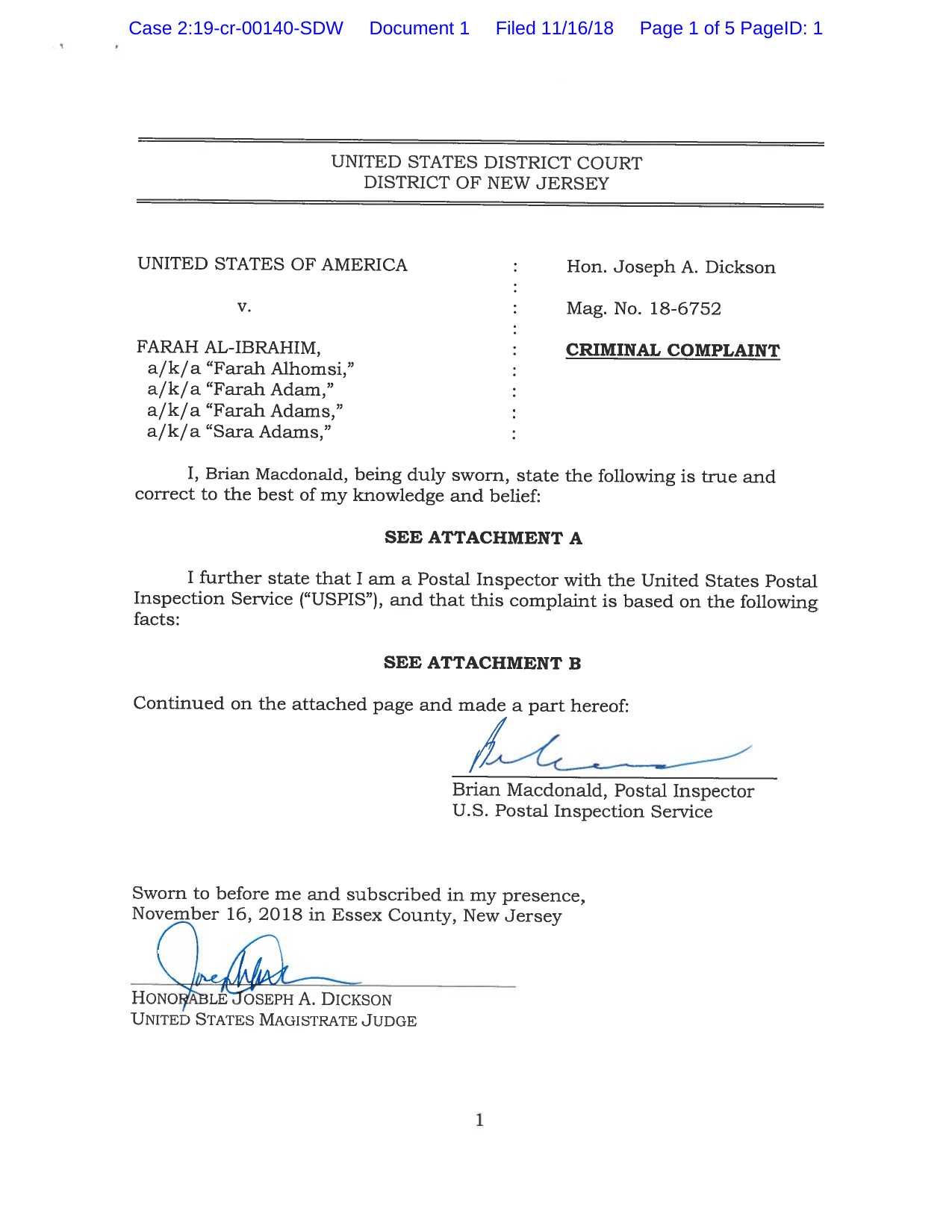
US v Farah Al-Ibrahim (D.NJ, 2018): Criminal complaint for conspiracy to commit wire fraud through a network of moving companies. Al-Ibrahim used four aliases.
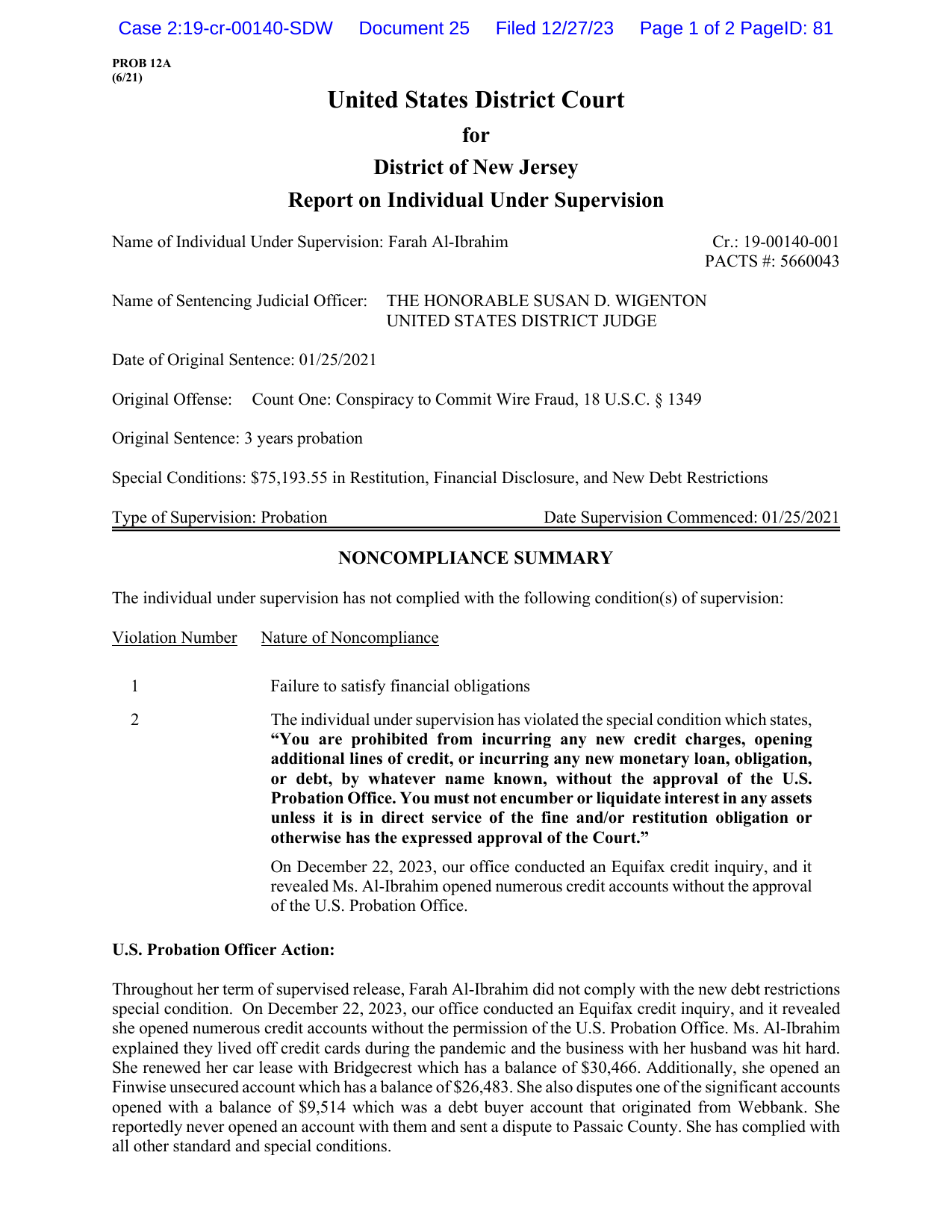
Probation report (December 2023): Al-Ibrahim paid $4,900 of $75,193 restitution. Payment reduced to $100/month. Violated new debt restrictions. Supervision expired January 2024.
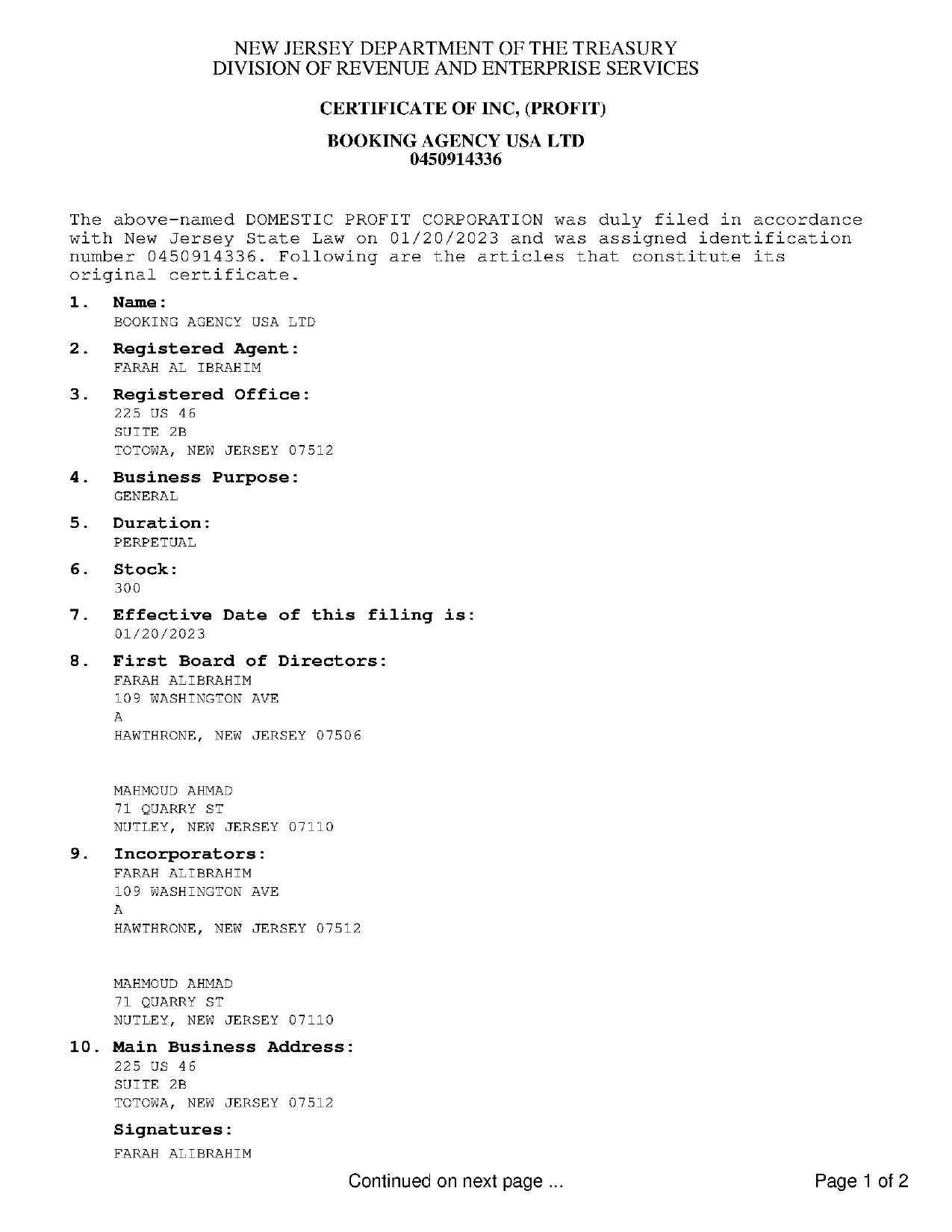
New Jersey corporate filing (January 2023): Al-Ibrahim incorporated Booking Agency USA Ltd while still on criminal probation for moving fraud. She is listed as registered agent, director, and incorporator.
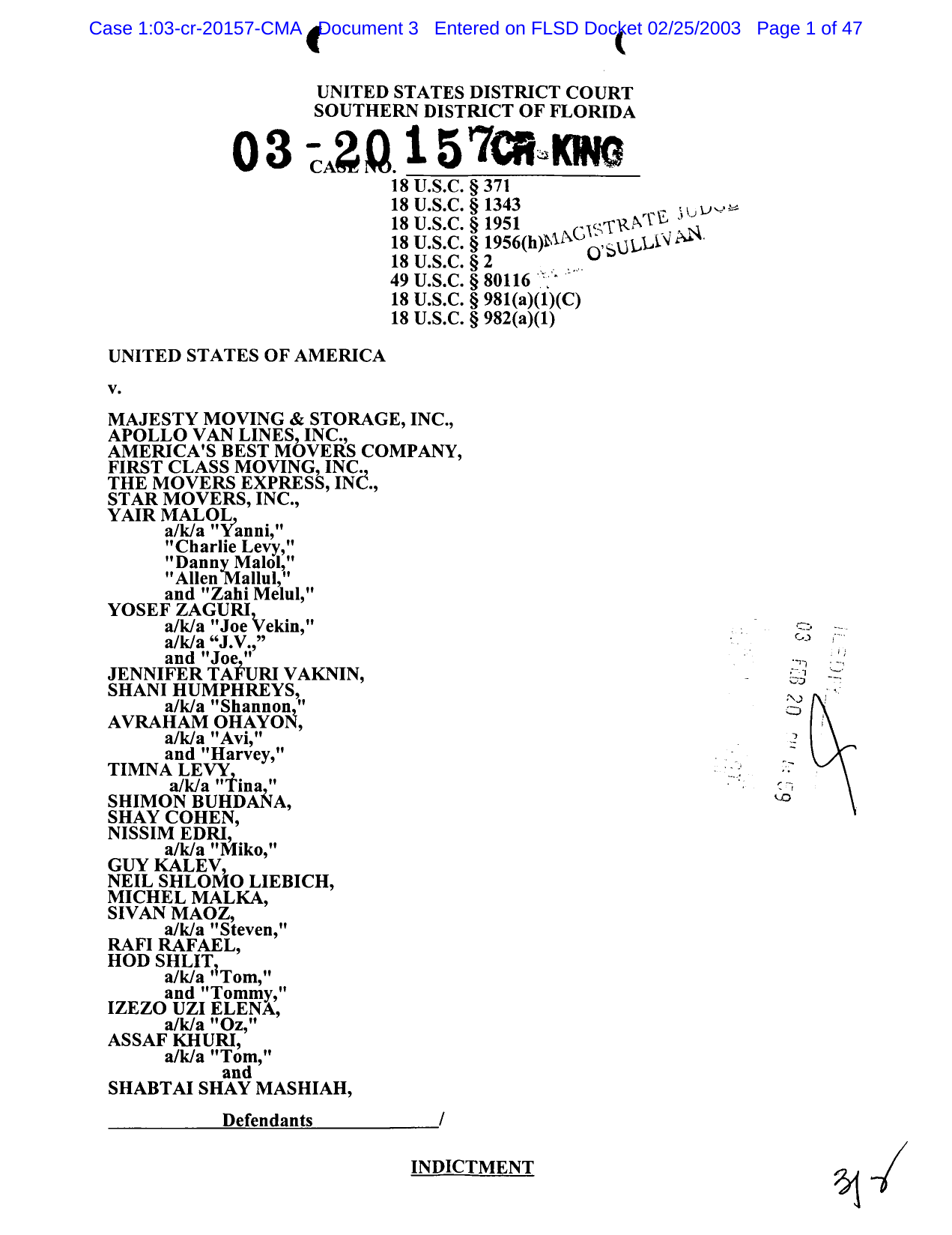
US v Malol (S.D. Florida, 2003): 47-page grand jury indictment of Yair Malol and 19 co-defendants operating six interchangeable moving companies.
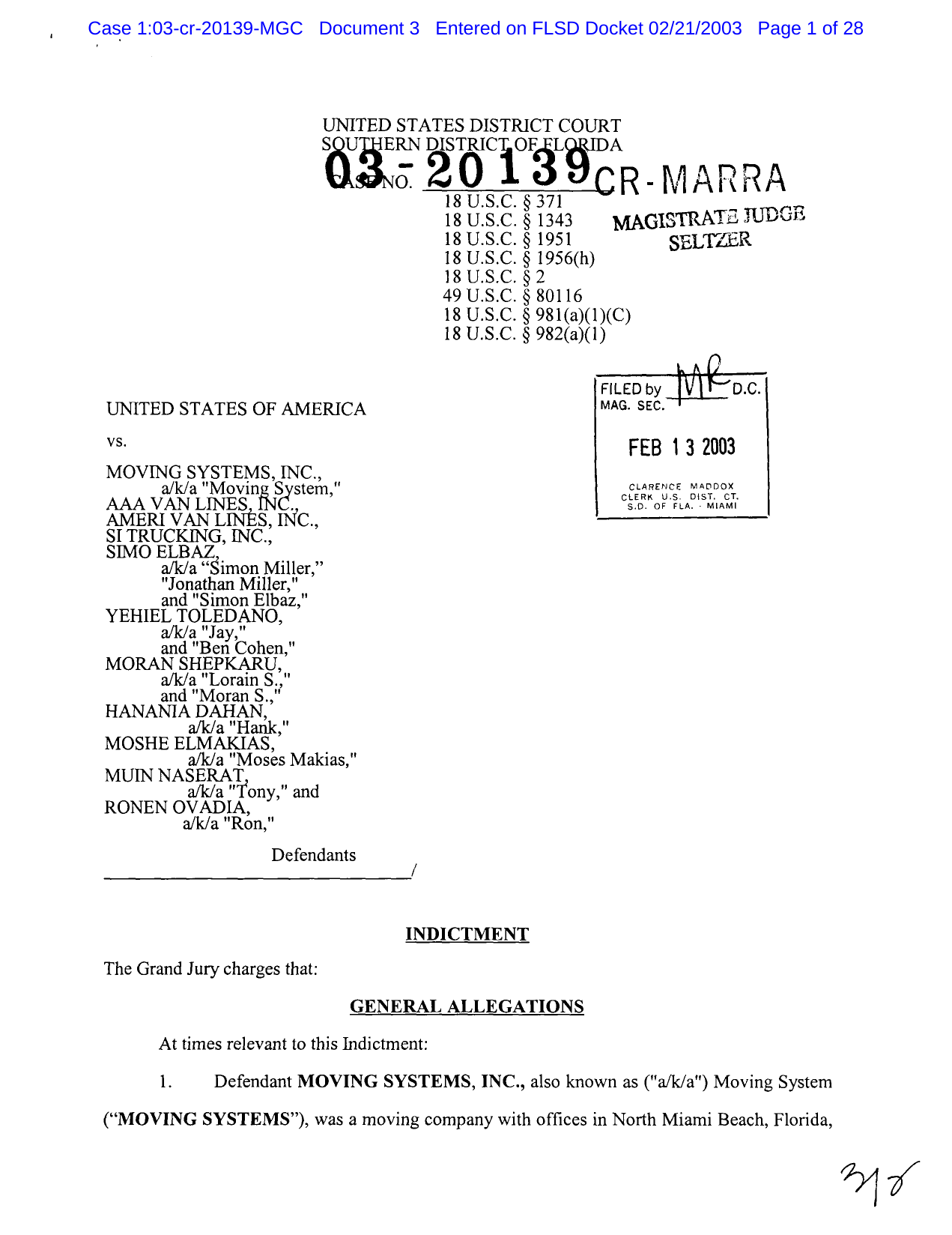
US v Elbaz (S.D. Florida, 2003): Grand jury indictment of Simo Elbaz operating Moving Systems, AAA Van Lines, Ameri Van Lines, and SI Trucking interchangeably.
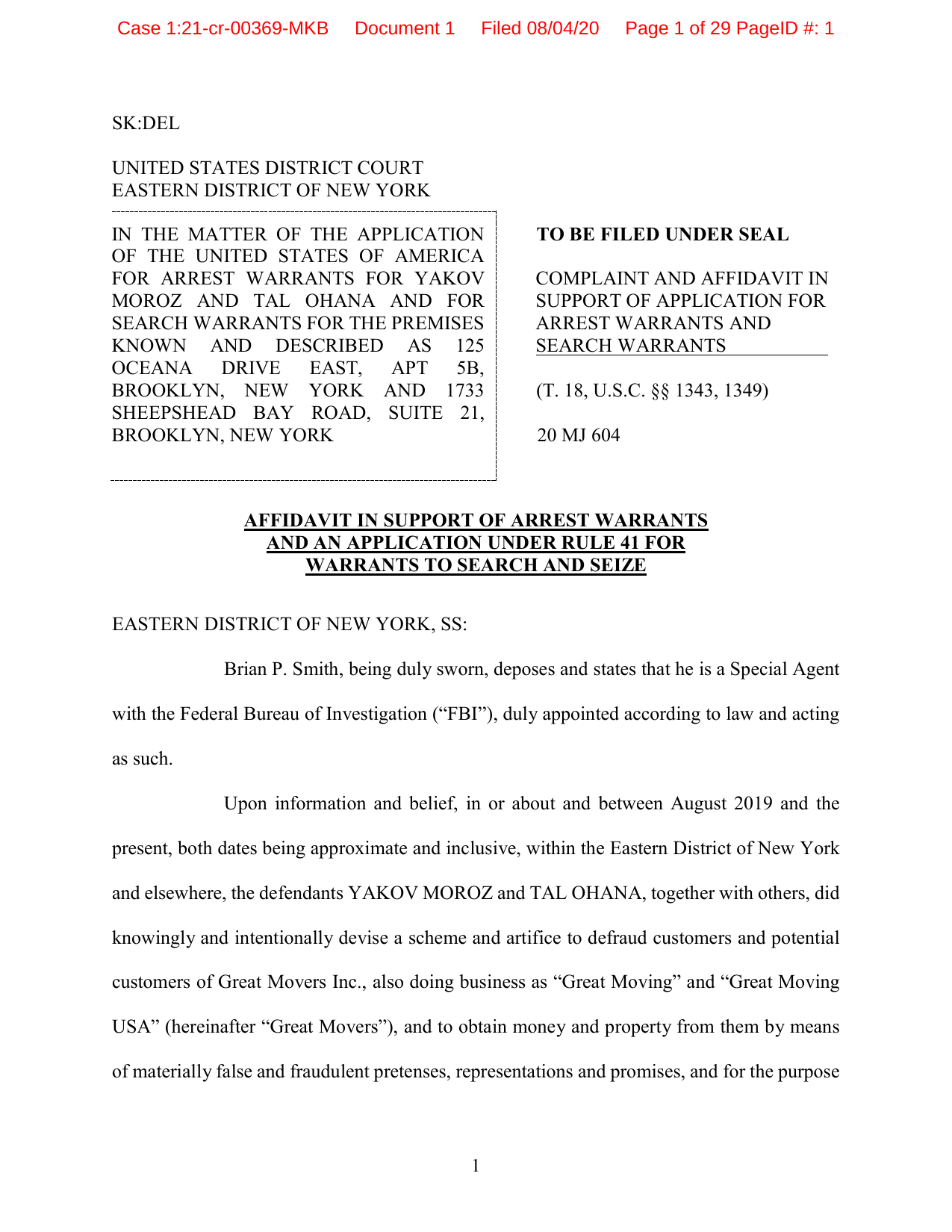
US v Moroz (E.D. New York, 2020): FBI Special Agent affidavit for arrest warrants. Great Movers Inc. d/b/a Great Moving and Great Moving USA. Wire fraud and conspiracy.
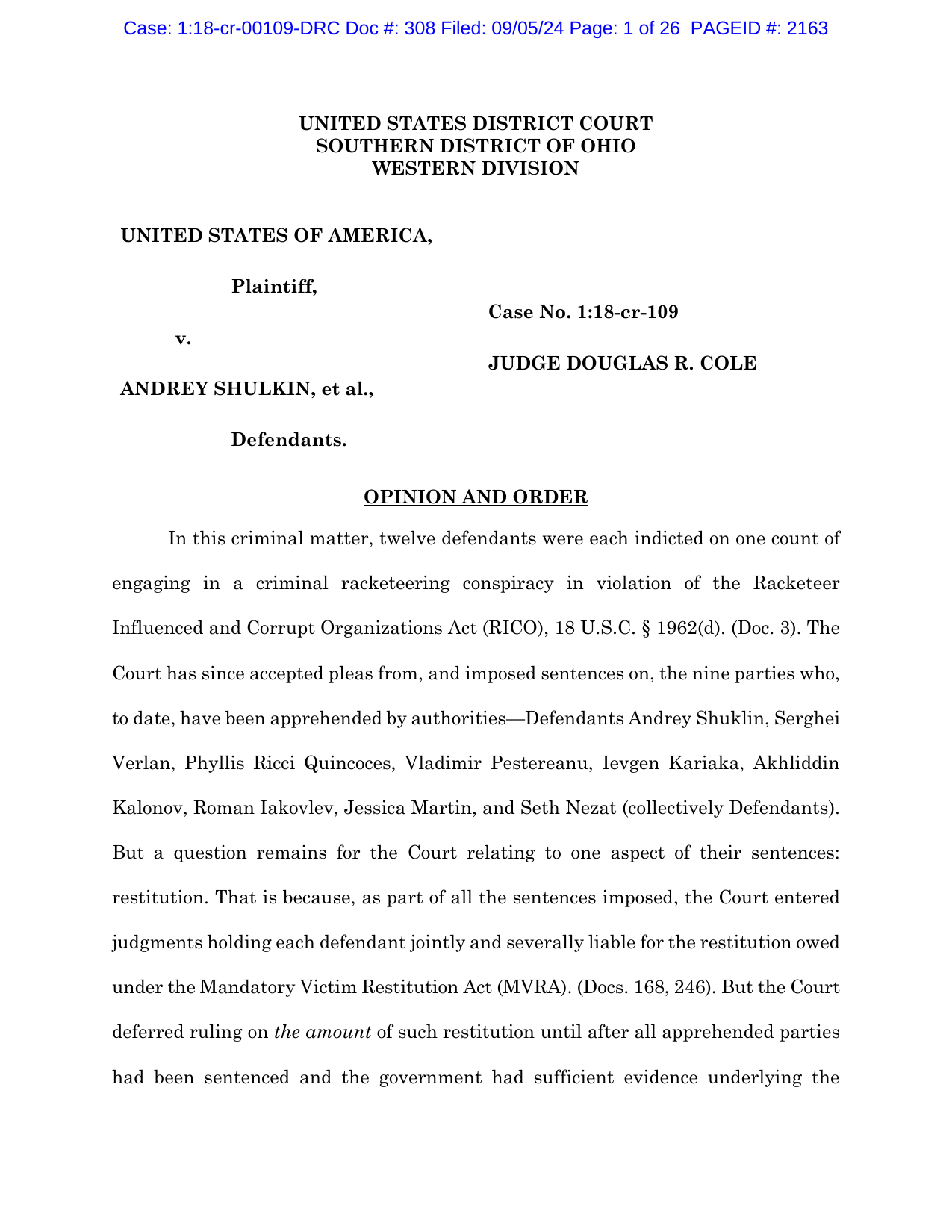
US v Shuklin (S.D. Ohio, 2024): Court orders $735,185.75 restitution for 87 victims of a RICO moving fraud conspiracy. Nine defendants convicted, three remain fugitives.
Companies Mentioned
Sources: Federal court filings: US v Al-Ibrahim (2:19-cr-00140, D.NJ), US v Moroz (1:21-cr-00369, E.D.NY), US v Malol (1:03-cr-20157, S.D.FL), US v Elbaz (1:03-cr-20139, S.D.FL), US v Shuklin (1:18-cr-109, S.D.OH). New Jersey Division of Revenue corporate records. FMCSA SAFER database. Facebook community groups including "Moving? Tips on moving & avoiding Moving Scams.". AGOYU Moving Guides, "Moving Scams: Confronting Ongoing Consumer Hardships Amidst Token Federal Crackdowns" (2024).