Moving with Firearms Across State Lines
Federal transport rules, state-by-state registration and permit requirements, shipping options, and what moving companies will and will not transport. Factual reference for lawful gun owners relocating between states.
Updated 2026-09-20
Federal Transport Rules
Firearm Owners Protection Act (18 USC 926A)
FOPA provides federal safe passage for lawful gun owners traveling through states where their firearms might otherwise be prohibited. The firearm must be unloaded and not readily accessible from the passenger compartment. In vehicles without a trunk, the firearm must be in a locked container other than the glove compartment or console. Ammunition must be stored separately from the firearm.
Locked case requirements
The firearm must be in a locked, hard-sided case. TSA-approved locks are recommended but not legally required for ground transport. Cable locks through the action provide an additional layer of compliance. If transporting multiple firearms, each should be in its own case or secured in a multi-gun case with individual compartments.
Continuous travel requirement
FOPA safe passage protections apply during reasonably direct travel between your origin and destination. Brief stops for fuel and food are covered. Extended stops (overnight hotel stays) in restrictive states create legal gray areas. Courts in New York and New Jersey have prosecuted travelers who stopped overnight despite FOPA. If your route passes through restrictive states, plan to transit without extended stops if possible.
NFA items (suppressors, SBRs, machine guns)
Items regulated under the National Firearms Act require ATF Form 5320.20 (Application to Transport) to cross state lines. Submit this form to the ATF 4 to 8 weeks before your move. The form is not required when permanently relocating, only for temporary transport. When permanently moving, update your address with the ATF within 60 days using the ATF eForms system.
State-by-State Firearm Laws (Top 20 Destinations)
Laws change frequently. Verify current requirements with your destination state's law enforcement agency or a firearms attorney before moving. This table reflects laws as of early 2026.
| State | Registration |
|---|---|
| California | Yes (all firearms) |
| Texas | No |
| Florida | No |
| New York | Yes (handguns) |
| Illinois | No (but FOID required) |
| Pennsylvania | No |
| Ohio | No |
| Georgia | No |
| North Carolina | No |
| New Jersey | Yes (handguns) |
| Virginia | No |
| Massachusetts | Yes (all firearms) |
| Arizona | No |
| Tennessee | No |
| Colorado | No |
| Washington | No (but semi-auto rifle purchase records kept) |
| Connecticut | Yes (assault weapons, pre-ban) |
| Maryland | Yes (handguns, regulated firearms) |
| Hawaii | Yes (all firearms within 5 days) |
| District of Columbia | Yes (all firearms) |
What Moving Companies Will and Will Not Transport
Most major movers refuse firearms
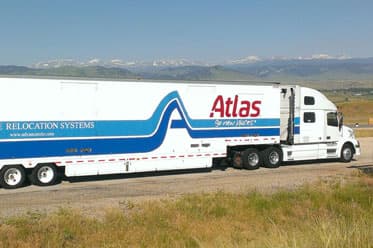
United Van Lines, Atlas Van Lines, Allied Van Lines, North American Van Lines, and most large interstate carriers list firearms and ammunition as prohibited items. Their tariffs and contracts explicitly exclude them. Even if a sales rep says they will take them, the contract language overrides verbal promises. Read the bill of lading carefully.
Gun safes without firearms
Most movers will transport an empty gun safe as heavy furniture. Gun safes weigh 200 to 1,500 lbs and require specialty handling. Expect a surcharge of $200 to $600 for safe moving depending on weight, stairs, and access. Remove all firearms and ammunition before the movers arrive. Some movers require a signed declaration that the safe is empty.
Ammunition restrictions
Ammunition is classified as hazardous material (ORM-D or 1.4S) under DOT regulations. No household goods mover is authorized to transport ammunition. You must transport ammunition yourself in your personal vehicle, ship it via UPS/FedEx ground service (labeled as ORM-D), or purchase new ammunition at your destination.
Specialty firearm movers
A small number of companies specialize in firearm transport for relocations. They hold appropriate FFL and carrier licenses, provide chain-of-custody documentation, and carry insurance specific to firearms. Expect to pay $100 to $500+ depending on collection size. Verify their FFL license number at the ATF's FFL eZ Check system.
Shipping and Transport Options
How to get your firearms from point A to point B when movers will not take them.
| Method | Firearms Covered |
|---|---|
| Self-transport (drive) | All legal firearms |
| FFL-to-FFL transfer | All firearms |
| USPS | Long guns only (individuals) |
| UPS/FedEx | All firearms (FFL account recommended) |
| Specialty firearm shipper | Collections, high-value firearms |
Storage During Transit
Temporary storage at an FFL
If there is a gap between moving out and moving in, a local FFL dealer can store your firearms temporarily. Expect to pay $10 to $25 per firearm per month. The FFL logs the firearms into their bound book and logs them out when you retrieve them. This provides a documented chain of custody and eliminates the risk of firearms sitting in a storage unit.
Storage units
Storing firearms in a commercial storage unit is legal in most states but comes with risks. Most storage facility rental agreements prohibit firearms and ammunition. Even where not prohibited, theft risk is elevated. If you must use a storage unit, use a locked gun safe inside the unit and choose a climate-controlled unit (humidity damages firearms). Do not store ammunition with firearms.
With a trusted person
Leaving firearms temporarily with a friend or family member is legal in most states if both parties can legally possess firearms. In states with universal background check laws (California, Washington, Colorado, and others), transferring possession even temporarily may require going through an FFL. Check your state's law before leaving firearms with another person.
Legal disclaimer. This page is for informational purposes only and does not constitute legal advice. Firearm laws change frequently at the federal, state, and local level. Consult a firearms attorney licensed in your destination state for guidance specific to your situation. Verify all state requirements directly with the relevant state law enforcement agency before transporting firearms across state lines.
Frequently Asked Questions
Will moving companies transport my firearms?+
What does federal law say about transporting firearms across state lines?+
Do I need to register my firearms when I move to a new state?+
Can I ship firearms to myself at my new address?+
What about my concealed carry permit when I move to a new state?+
How should I store firearms during a cross-country move?+
What items related to firearms are restricted when moving between states?+
Related
~$1,500 2BR local
~$970 2BR local
~$2,460 2BR local
~$1,400 2BR local
~$1,100 2BR local
~$2,500 2BR local
~$545 2BR local
~$854 2BR local
~$676 2BR local
~$750 2BR local
~$700 2BR local

~$750 2BR local
~$1,430 2BR local
~$1,800 2BR local
~$1,250 2BR local
~$845 2BR local
~$1,777 2BR local
~$2,000 2BR local
~$1,105 2BR local
~$700 2BR local
~$1,196 2BR local
~$1,250 2BR local
~$1,052 2BR local
~$1,020 2BR local

~$2,325 2BR local
~$1,000 2BR local
~$750 2BR local
~$750 2BR local
~$660 2BR local
~$640 2BR local
~$900 2BR local
~$1,658 2BR local
~$728 2BR local
~$600 2BR local
~$700 2BR local
~$750 2BR local
~$6,400 2BR local
~$684 2BR local
~$780 2BR local
~$716 2BR local
~$750 2BR local
~$1,200 2BR local
~$280 2BR local
~$650 2BR local
~$1,554 2BR local
~$610 2BR local
~$700 2BR local

~$950 2BR local
~$2,162 2BR local

~$1,979 2BR local
~$2,170 2BR local

~$2,055 2BR local
~$1,200 2BR local




~$1,500 2BR local
~$970 2BR local
~$2,460 2BR local
~$1,400 2BR local
~$1,100 2BR local
~$2,500 2BR local
~$545 2BR local
~$854 2BR local
~$676 2BR local
~$750 2BR local
~$700 2BR local
~$750 2BR local
~$1,430 2BR local
~$1,800 2BR local
~$1,250 2BR local
~$845 2BR local
~$1,777 2BR local
~$2,000 2BR local
~$1,105 2BR local
~$700 2BR local
~$1,196 2BR local
~$1,250 2BR local
~$1,052 2BR local
~$1,020 2BR local
~$2,325 2BR local
~$1,000 2BR local
~$750 2BR local
~$750 2BR local
~$660 2BR local
~$640 2BR local
~$900 2BR local
~$1,658 2BR local
~$728 2BR local
~$600 2BR local
~$700 2BR local
~$750 2BR local
~$6,400 2BR local
~$684 2BR local
~$780 2BR local
~$716 2BR local
~$750 2BR local
~$1,200 2BR local
~$280 2BR local
~$650 2BR local
~$1,554 2BR local
~$610 2BR local
~$700 2BR local
~$950 2BR local
~$2,162 2BR local
~$1,979 2BR local
~$2,170 2BR local
~$2,055 2BR local
~$1,200 2BR local